Chocolate Chip Cookies
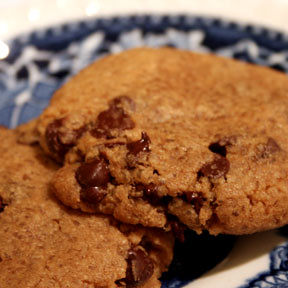
There is nothing better than thinking you are completely out of groceries…and then discovering that you have exactly enough to make a delicious batch of vegan carob chip cookies! Oooooh!
These are horribly horrible for you…believe me, not everything vegan is healthy. But they are so yummy. Actually, I should give myself some credit for using whole wheat pastry flour, but even that is canceled out by the CUP of margarine! We rarely make cookies though…so this is a definite treat. Taken from one of my favorite cookbooks, Vegan With a Vengeance by Isa Chandra Moscowitz.
1 cup non-hydrogenated margarine, at room temperature (I like Earth Balance Organic)
1 1/4 cup dry sweetener (I use rapadura)
1 T molasses
2 t vanilla extract
2 1/2 cups whole wheat pastry flour
1 t baking soda
1 t salt
1 1/2 cups vegan carob chips…or semi-sweet chocolate chips
Preheat oven to 350 degrees. Cream together the margarine and sweetener until fluffy. Add the molasses and vanilla. Add the flour, baking soda, and salt, and mix well. Fold in the chocolate chips. Drop by teaspoonfuls spaced a little over 2 inches apart onto an ungreased cookie sheet. Bake for 8-10 minutes, until just slightly browned. Let cool on the baking sheets for 5 minutes, then transfer to cooling rack.
Honey Baked Lentils
I found this recipe on the Mothering forums…but there are lots of variations elsewhere. I was looking for a great recipe to use up my red lentils, and I FOUND IT! I am in love with this recipe and I will definitely be making it a lot this winter. It’s really, really inexpensive…especially if you are buying your lentils in bulk. I love that it’s a “one-pot” recipe. I just threw all of this into my stoneware loaf pan, covered it in foil, and poof! Time to eat.
1 cup lentils (I use red)
2 cups water
2 tbsp honey
2 tbsp gluten free tamari
2 tbsp olive oil
1/2 tsp ginger
1 clove garlic
1 small onion
salt & pepper to taste
Bake in a covered dish at 350 until tender (about an hour and a half).
You could also substitute 1/3 cup of rice or barley for some of the lentils…and add whatever “winter” vegetables you have on hand. When I made it, I used squash and potatoes. It was delicious.
We ate this as a soup, but it could also be eaten over brown rice or quinoa, or on some flatbread. We eat it as the main dish, but it would be a great side dish as well. Can’t wait to make this again!
Tofu Sticks
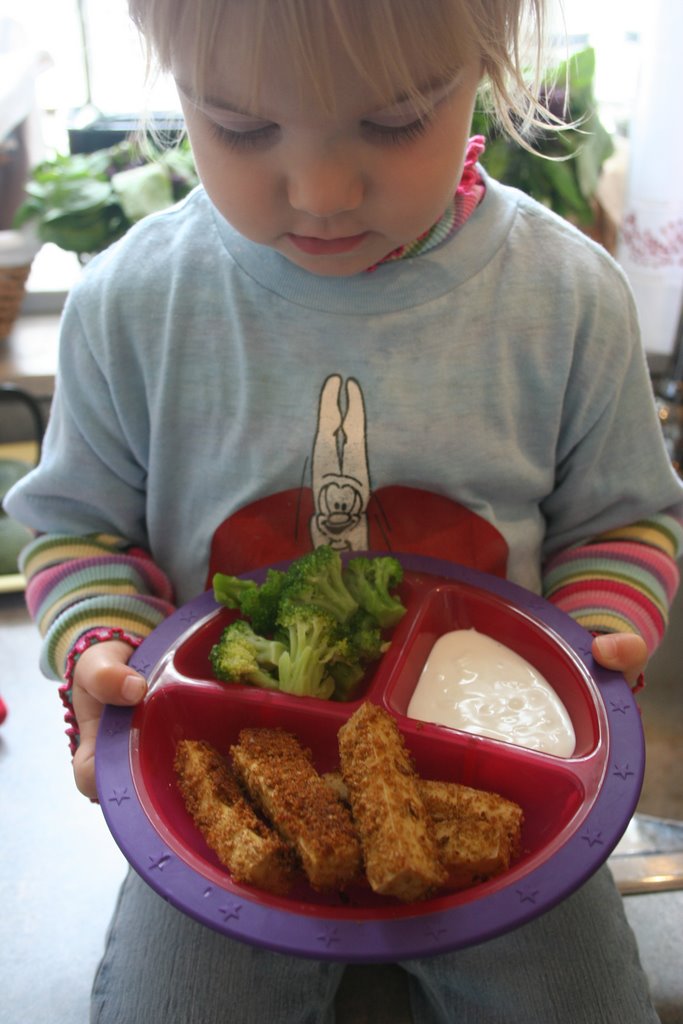
Bella loves to dip things…so this week we made “Tofu Sticks” from Simply Natural Baby Food by Cathe Olson. They are deliciously crispy AND tasty.
1 lb. extra firm tofu
1/2 cup fine bread crumbs (whole wheat) or cracker crumbs
3 T sesame seeds (optional)
1 T nutritional yeast
1/4 t paprika
1/2 t kelp powder
3 T olive oil
Press the water out of the tofu using a towel. If you use the tofu packed in water, you may want to rest something heavy on it for 10-15 minutes to get the water out. In a pie plate or shallow bowl, combine crumbs, seeds, nutritional yeast, paprika, and kelp. Cut the tofu block in 1/2 lengthwise. Turn tofu back to the widest side, and cut tofu into 1/2 inch slices across the shorter end. You should have 12 pieces.
Preheat oven to 375 degrees. Toss tofu sticks with olive oil…coating all sides. Next, carefully roll the sticks in the breading mixture until coated.
Place them on a baking sheet (stoneware works best). Bake for 25-30 minutes or until brown and crisp. You may have to turn them once.
For the sauce, I use vegenaise with a little dill pickle juice and lemon juice added. Yum! These were a big hit.
Basil Basil Basil
 So much basil! I am planning on making a large batch of pesto with these bunches…and freeze it to use later. Here is one of the pesto recipes that I’m going to try:
Lemon Artichoke Pesto w/ Toasted Pinenuts
Recipe compliments of Brooke the Vegan
1 cup canned artichoke hearts, quartered
2 large cloves garlic, minced
1/2 cup packed fresh basil
1/4 cup water
1 tablespoon nutritional yeast flakes (or more as desired)
1 1/2 tablespoons fresh lemon juice
1 teaspoon freshly grated lemon zest
olive oil
salt and pepper, to taste
pinenuts, toasted
Blend first seven ingredients, adding olive oil for desired consistency. Top with toasted pinenuts.
Sounds pretty tasty!
Simple

I think simple is always better when it comes to food. This is a very simple dish, yet very complex in flavor and nutritional value. Organic whole wheat elbow macaroni topped with Seeds of Change Arrabiatta sauce…and some freshly chopped organic basil.
The jar of sauce was given to me by a good friend as a housewarming gift…and boy was it tasty. Just enough spice to keep it interesting. Be sure to check it out!
The Ultimate Sandwich

This was an amazing sandwich…oh the deliciousness!
Rudy’s Organic Honey Whole Wheat Bread
Organic heirloom tomato and tapestry salad mix from Blue Gate Farms
Avocado with lemon juice and salt
Vegenaise
I will be eating this several more times this week. But I’ll be adding cucumber and sprouts. Even more yummy.
Buy Bulk

I love the bulk bins. I could stand there and stare at them for hours. So many pretty things. Beautiful organic package-free goodness. Have you ever tried to focus on buying things with minimal packaging? It’s crazy how much cardboard and plastic companies wrap around their products!
I also love putting them in my jars when I get home (see photo). For those of you who are bulk dry foods challenged, from L to R (top row): red lentils, split peas, garbanzo beans, quinoa. Bottom row: Raisins, popcorn, long-grain brown rice, and pinto beans.
Buying bulk is cheaper, healthier and better for the environment. One of my favorite webistes (New American Dream) wrote up a nice little ditty. Here you go:
One useful piece of advice I’ve heard is to “buy bulk.” This can mean one of three things, all of which can save money.
Firstly, there’s the bulk bin section of the grocery store – the bins with loose flour, rice, etc. that you scoop into a bag and pay for by the pound. Not all grocery stores have a bulk bin area or carry organic items in it, so you may need to shop around. At my local store, I’ve realized big savings by purchasing staples like organic flour, dried beans, pasta, cereal, peanut butter, and cooking oil from the bulk bin section. An eco-friendly bonus is that less packaging is used for foods sold in the bulk bin section. I sometimes go the extra mile and bring my own clean, reused plastic bags to the store so that no new packaging is required.
Secondly, you can “buy bulk” by buying organic foods in bulk packages. These big packages often have a lower price per pound than smaller packages and also generate less packaging waste. In my case, I like to buy the 25-pound sack of organic brown rice. It costs less per pound than a one- or two-pound package and lasts forever. Single people, small households, or those with limited storage space can team up with one or more friends and split a bulk package between themselves. (A helpful side note: stores with bulk bin areas probably carry 25- and 50-pound bulk packages – that’s what they use to fill the bins. Ask your friendly organic grocer if they will sell the bulk package to you directly, at a discount.) I’ve read that certain commodities like organic coffee and chocolate can cost the same as their conventional counterparts, if you purchase a year’s supply at a time and then store it in individual airtight containers. And this strategy isn’t limited to dry goods, either – I’ve also read about several families who realized savings by splitting a side of organic beef. Some possible sources for bulk packages are Costco, ShopNatural, Azure Standard, Ozark Organics, and Door to Door Organics.
A third way to “buy bulk” is to buy large numbers of organic items, especially when they are on sale. Organic canned soup on clearance? Don’t stop at 5 or 10 cans – think big – buy a case or two and keep them in your closet or share with friends. Fresh produce is a good candidate for similar treatment. If you can’t eat all that discounted organic produce at once, items like berries or chopped bell peppers can be frozen in plastic bags for later use. A chest freezer, especially an energy-efficient model, may come in handy for doing this on a bigger scale. These freezers come in all sizes, from ones small enough for single people, to large models for big families. Just make sure that the operating costs for your freezer don’t cancel out the savings from your bulk buys! Another option for preserving large batches of discounted organic fruits and veggies is to dry or can them, if you have the time, equipment, and know-how.
Thanks New Dream for putting my thoughts into words at this late hour. Just say NO to excessive packaging!
Good Food
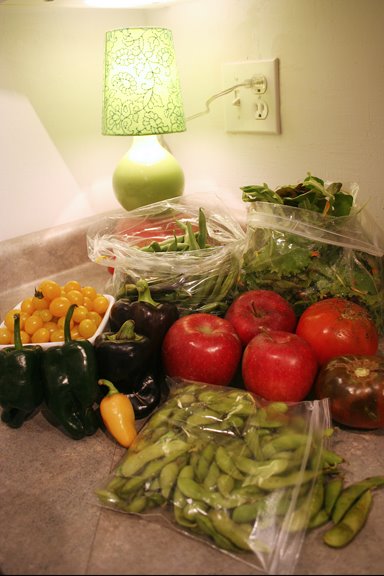
Here is today’s CSA goodness. I don’t have the list right in front of me with all the exact names and what not, but here is the quick run down.
*Apples! Yay!
*Green beans
*Peppers
*Tomatoes…big and little
*Tapestry salad mix…yum!
*Edamames
There was one more apple and TONS more little yellow tomatoes…but Bella and I were really hungry on the way home.
Tea Perfection

I love tea. It has so many qualities…refreshing, healing, cleansing, warming, cooling. I prefer loose leaf teas…but I have found several “full leaf” bagged teas that I enjoy. If you’ve never tried loose leaf…you’re missing out!
The teas that I drink the most are:
*Ancient Happiness from Gong Fu and Apricot Green from Adagio.
*Rooibos…Vanilla Rooibos is the best.
*Evening in Missoula
*Pacific Breeze from Gong Fu…or Citron Oolong by Rishi Tea.
One of my favorite summer teas is Passion Tea by Tazo. You can get it at Starbucks (they make it daily). If you want to get a little wild, try their Passion Tea Lemonade. Yum. Tea is where it’s at.
Homemade Almond Milk

Homemade Vanilla Almond Milk
Cookbook: Living Cuisine: The Art and Spirit of Raw Foods
Renee Loux Underkoffler
Makes 4 cups.
“A sweet and delicious fresh milk with the elegant essence of vanilla”
1 cup soaked raw almonds (soaked 4-8 hours)
4 cups filtered water
Pinch of sun-dried sea salt
1 T non-alcohol vanilla extract
1/2 vanilla bean (optional)
3 T raw honey or maple syrup (or 3 soft dates, pitted)In a blender, at medium, then high speed, blend soaked almonds, water, and sea salt until smooth. Pour through a strainer (or use a nut bag) to separate pulp. Pour liquid back in the the blender and blend in vanilla extract and bean (if using) and sweetener until smooth.
Human beings should not drink milk from a cow. It’s that simple. So many illnesses and afflictions in children (and adults for that matter) could be cured if they would just cut out milk and milk products. There are tons of doctors, organizations, websites, etc…that will tell you the same thing, so you can do your own research. Here is one to get you started. Almond milk is a delicious alternative to cow’s milk. Once you make your own…you’ll never go back! It’s so creamy and delicious. Perfect for dipping cookies, baking with, or drink it plain. Yum!


 Happy Foody